Overlap
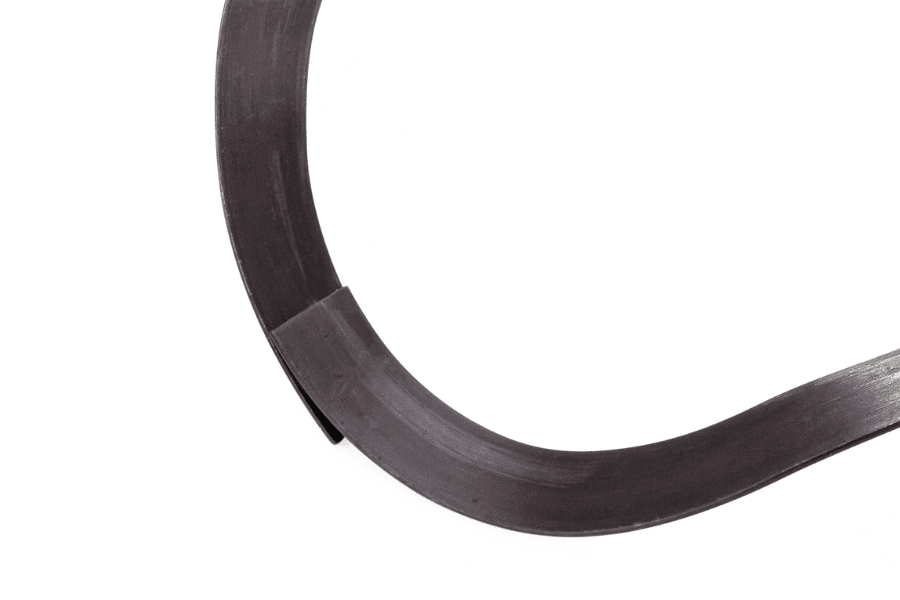
Overlap ends bring one spring end over the other, eliminating gaps between the ends. This configuration prevents tangling during handling and provides smooth mating with the assembly surface.
Single-Turn Wave Springs Engineered for Compact, Short Deflection Applications with Low to Medium Forces
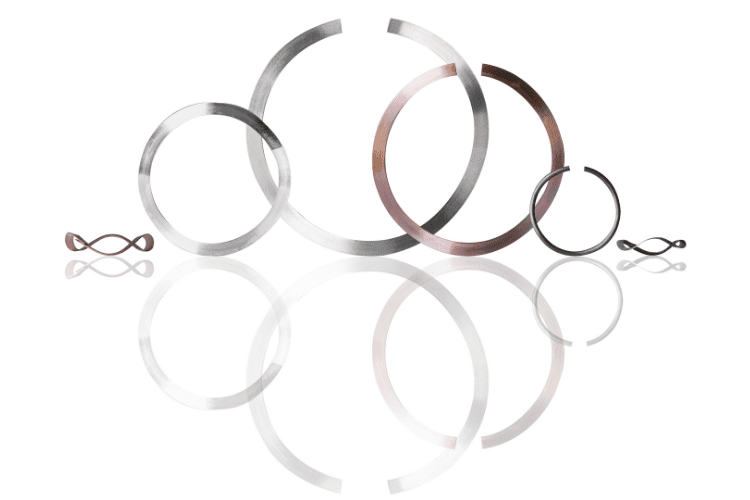
Single-Turn Wave Springs are designed for applications requiring low to medium thrust loads, with performance characteristics that vary based on design and wire type. Available for a wide range of bore and rod diameters, they provide accurate spring rates and loads with tolerances more than 50% tighter than stamped wave washers or disc springs. Unlike stamped parts, Single-Turn Wave Springs are coiled from flat wire to minimize material waste and can be designed with cling-in-bore or cling-on-shaft configurations that help center the spring during installation. Whether you’re looking to provide preload or take-up tolerances in your assembly, Single-Turn Wave Springs are ideal for applications that require accurate, repeatable load.
The following design features make Rotor Clip Single-Turn Wave Springs suitable for a wide range of applications, from bearing preloads and quick connects to valve assemblies and other compact, low-clearance designs.
Rotor Clip Single-Turn Wave Springs differ from disc springs (Belleville washers) and stamped wave washers across key design and performance characteristics. Compare the springs in the table below.
| Feature | Benefit | Rotor Clip Single-Turn Wave Spring | Disc Spring (Belleville Washer) | Stamped Wave Washer |
|---|---|---|---|---|
| Manufacturing Method | Allows flexible spring configurations without additional tooling costs | Coiled from flat wire | Stamped and formed from sheet material | Stamped from sheet material |
| Load & Spring Rate | Provides accurate, repeatable spring performance | Toleranced more than 50% tighter than stamped wave washers or disc springs | Load and spring rate vary by washer geometry and stack configuration | Load and spring rate depend on the stamping process |
| Assembly Positioning | Helps maintain spring alignment during installation | Optional cling-in-bore or cling-on-shaft configurations help center the spring | Typically requires separate locating or retaining features | Typically requires separate locating or retaining features |
| Material Utilization | Reduces material usage, which can provide cost savings for larger dimensions or high-cost alloys | Coiling produces minimal material waste compared to stamped designs | Higher material waste from the stamping process | Higher material waste from the stamping process |
| Custom Capabilities | Supports application-specific spring requirements | Custom diameters, materials, loads, finishes, cling-in-bore or cling-on-shaft configurations, and other design modifications | Custom options typically limited to washer geometry, thickness, and material | Custom options typically limited by tooling, material thickness, and stamping process |
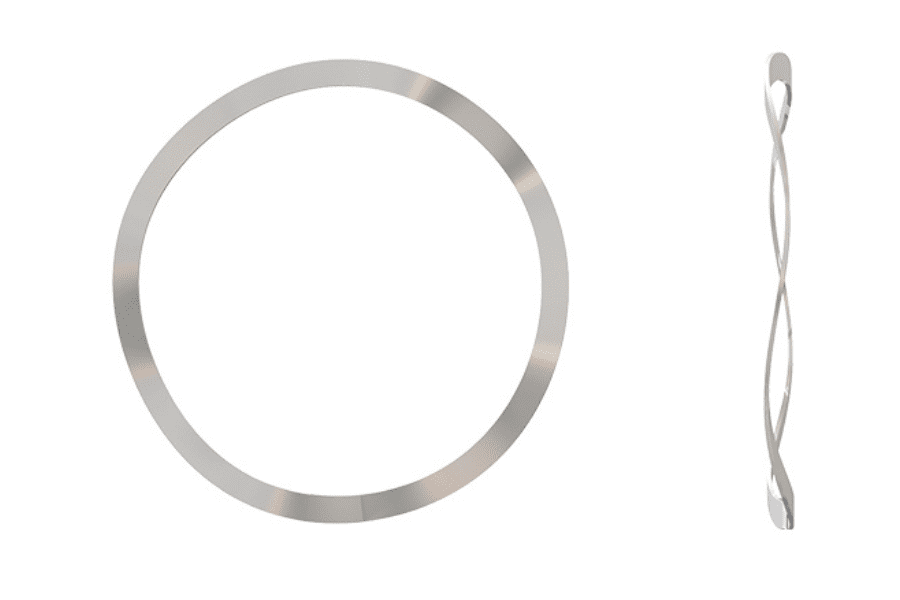
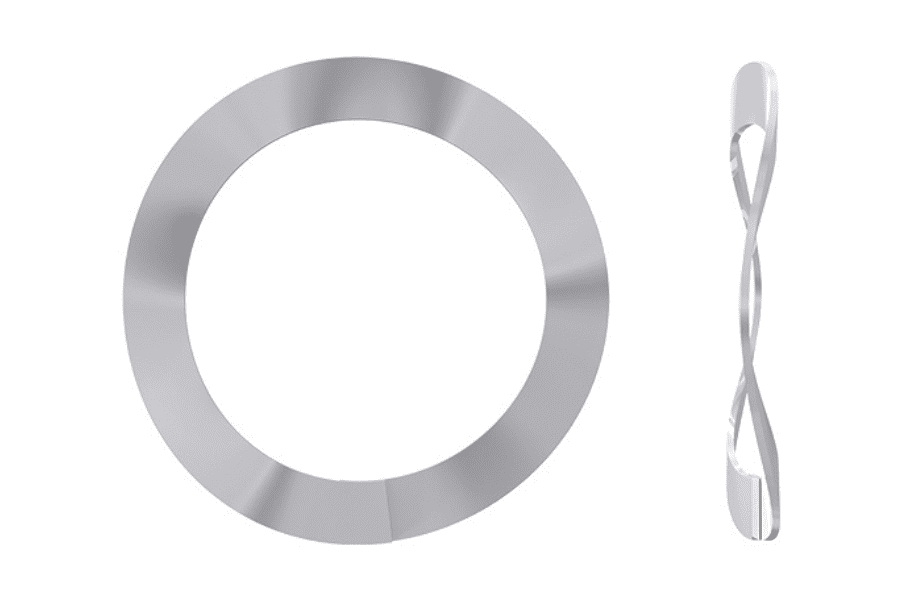
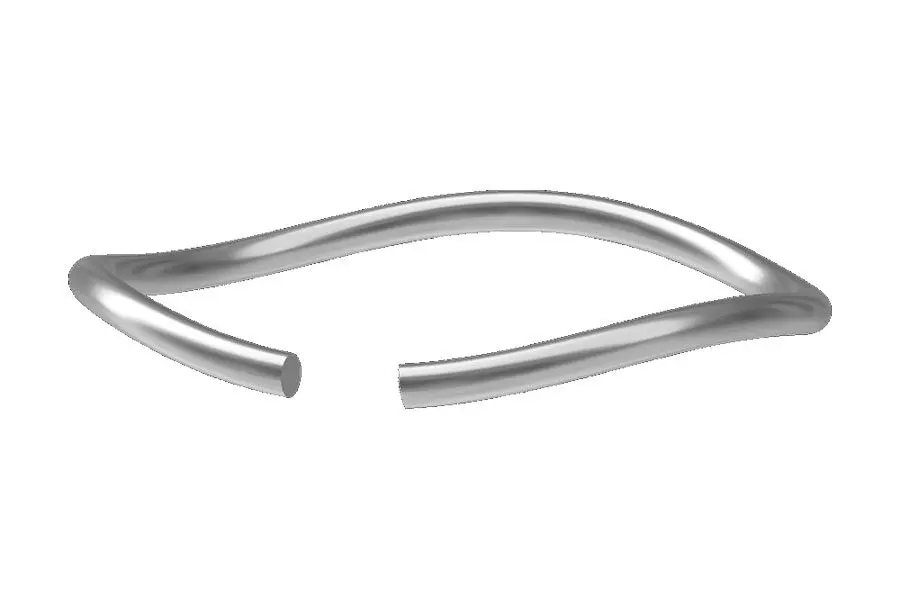
Rotor Clip Single-Turn Wave Springs are available with multiple end configurations to accommodate different assembly requirements and application needs.
Learn more about wave spring end types
Overlap ends bring one spring end over the other, eliminating gaps between the ends. This configuration prevents tangling during handling and provides smooth mating with the assembly surface.
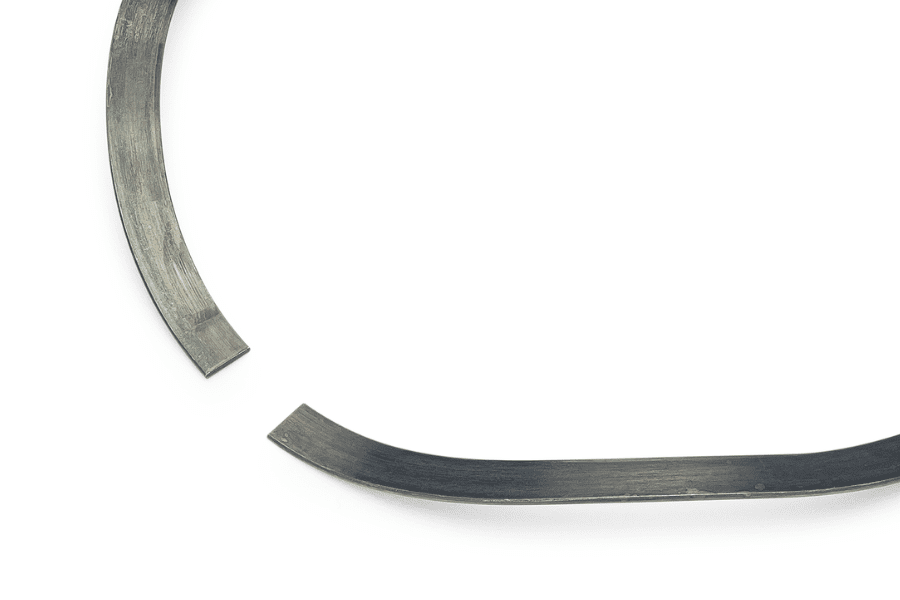
Gap-type ends create a defined space between the ends of the spring. The gap size can be controlled to accommodate assembly clearance requirements or components that need to pass through the spring opening.

Rotor Clip’s patented flat-end design flattens the spring ends, helping mitigate sharp corners contacting the mating surface. This allows the spring to sit more evenly against the mating surface, helping reduce potential surface wear and providing smoother contact in preload applications.
Rotor Clip offers a wide range of material and finish options for wave springs to meet specific application requirements. See below for some of the most common options. Additional materials and finishes may be available depending on the part type and design configuration. Consult our engineering team to determine the best material solution for your application.
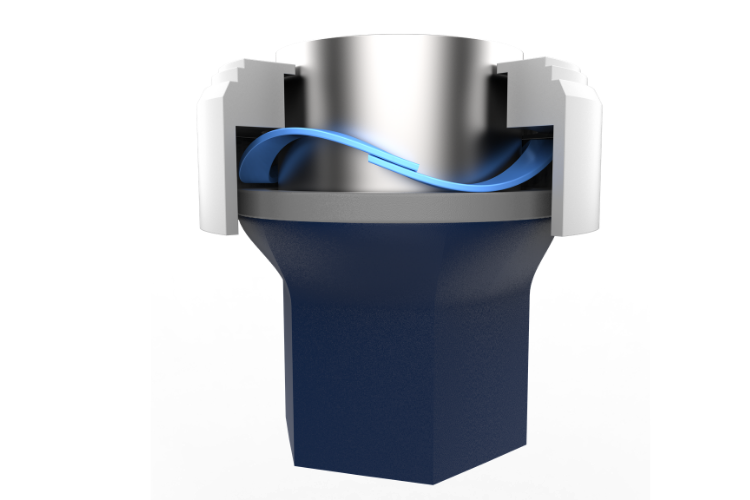
Single-Turn Wave Springs provide precise, consistent preload in quick connector assemblies while requiring minimal axial space. Their cling-in-bore design helps center the spring within the housing, while overlap ends help prevent radial jamming and maintain consistent loading throughout the connection cycle.
Single-Turn Wave Springs are used across a wide range of industries, including automotive, medical, aerospace, and industrial applications. See common application examples below.
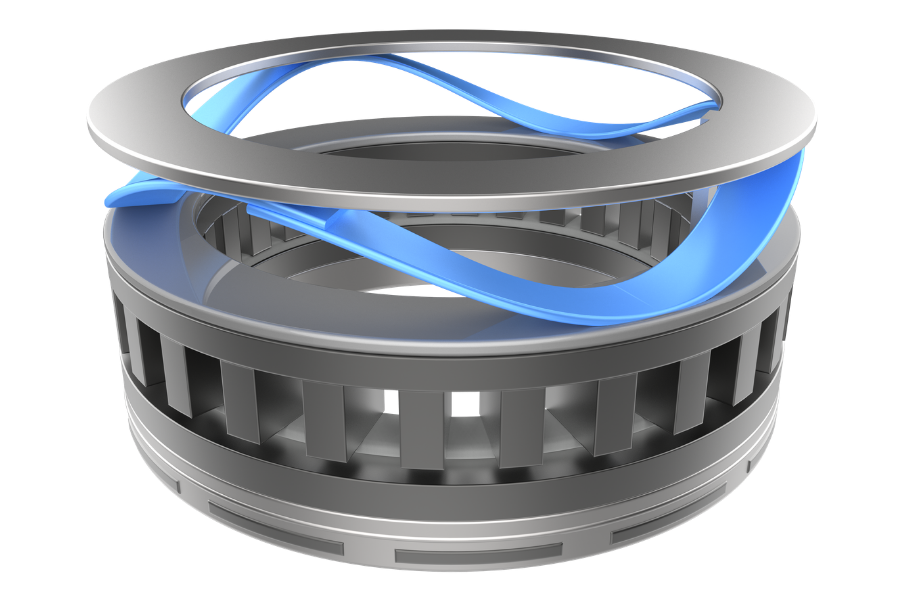
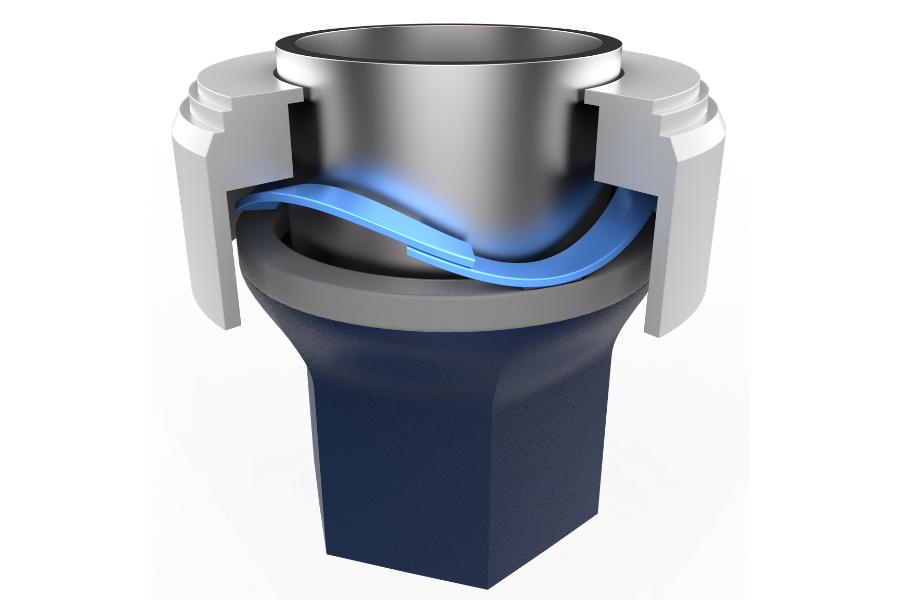
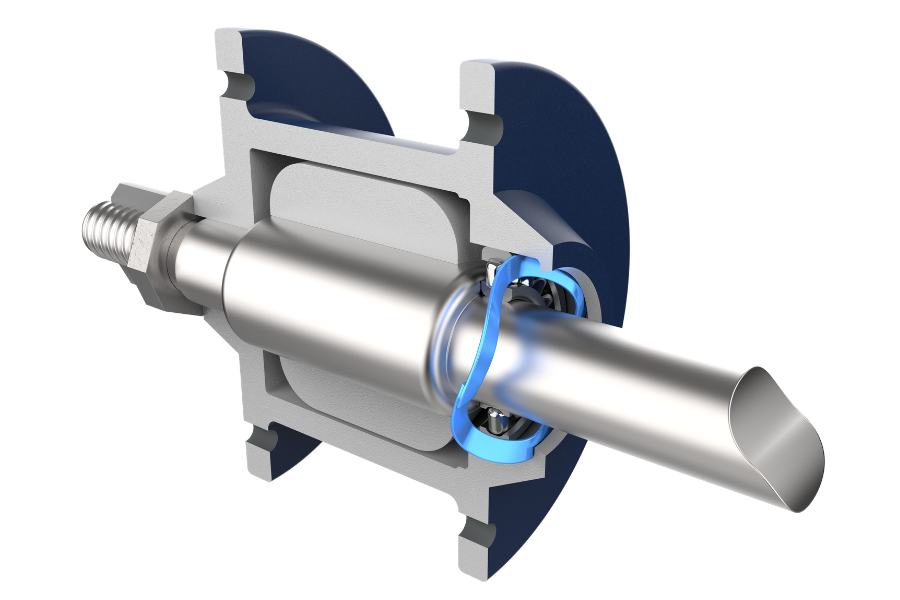

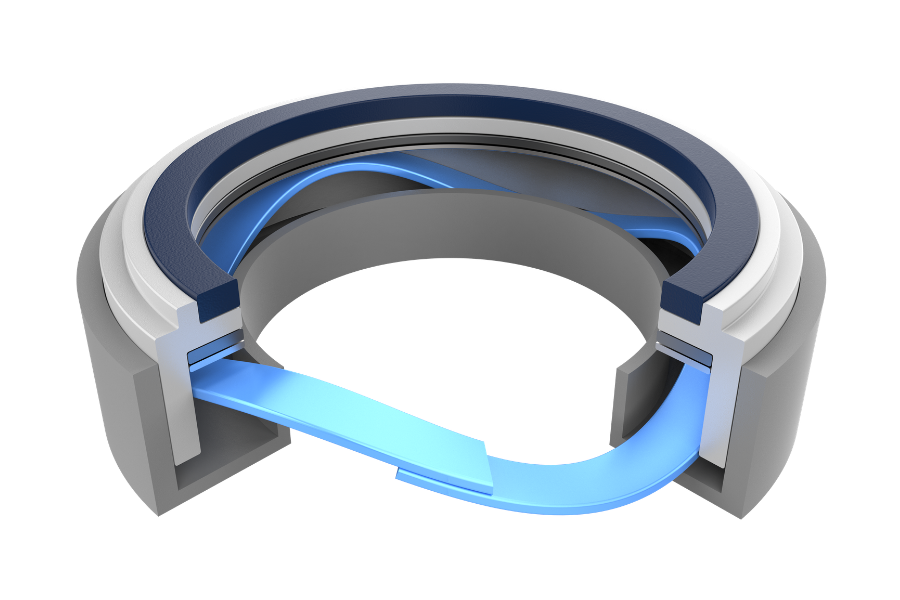
Watch our wave spring video for an overview of Single-Turn Wave Spring design, manufacturing processes, configurations, and application considerations. Learn how different wave spring designs help meet space, load, and assembly requirements across a wide range of applications.
Explore our most frequently asked questions on single-turn wave springs.
A Single-Turn Wave Spring is a flat wire compression spring formed into a single coil with multiple waves. It provides controlled axial force in a compact design and is commonly used as an alternative to disc springs (Belleville washers) or stamped wave washers in compact assemblies.
In many applications, yes. A Single-Turn Wave Springs can be used as an alternative to disc springs and stamped wave washers when tighter load and spring rate tolerances, cling-in bore positioning or reduced material waste are required. The appropriate design depends on the application’s load, deflection and cycle-life requirements.
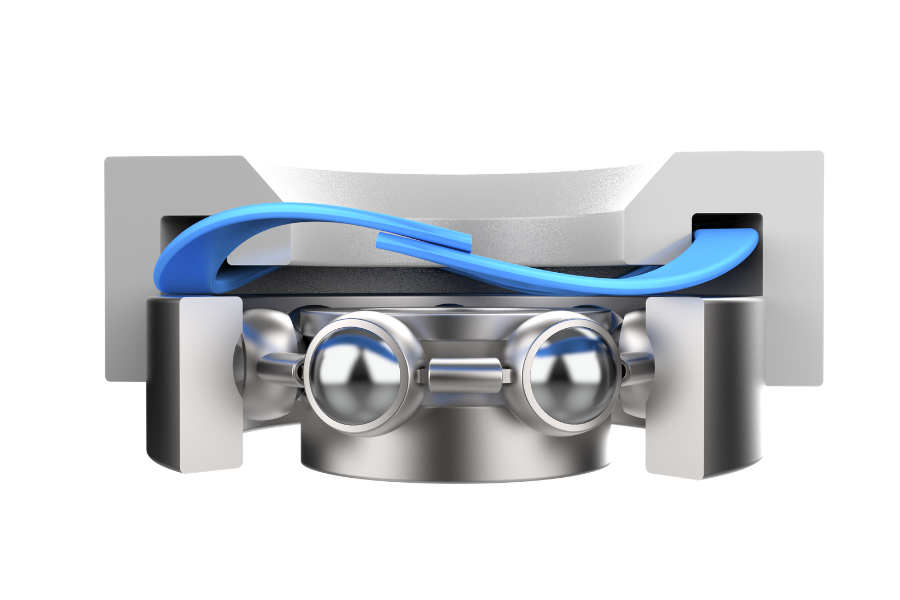
Yes. Single-Turn Wave Springs are commonly used for bearing preload applications where controlled axial force is required to reduce internal clearance within ball or roller bearing assemblies. They help maintain consistent contact between bearing components, limiting unwanted movement that can contribute to vibration, noise, and wear during operation.
Our passion is creating the best rings, springs, and clamps. Our mission is to make your work a success. We are here for you.