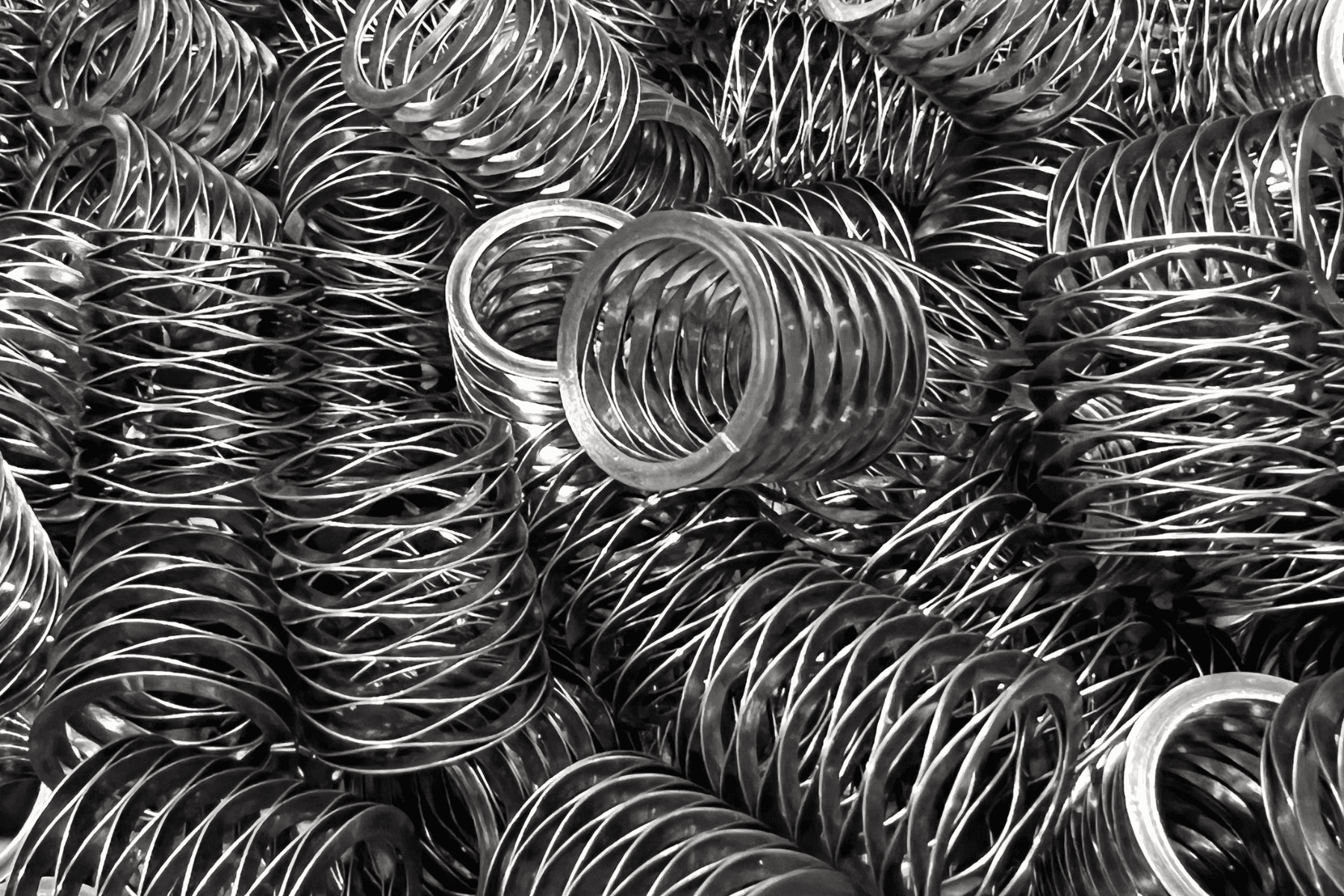
Image of a bulk collection of multi-turn wave springs by Rotor Clip

Custom Wave Springs

Engineered around your load, deflection, space, and operating requirements, with no additional tooling costs and the manufacturing flexibility to bring nonstandard designs into production.

Submit Your Requirements Talk to an Engineer

custom wave springs and circlips at rotor clip

When a Standard Wave Spring Isn’t the Right Fit

Standard wave springs accommodate a wide range of applications, but many designs call for specific loads, work height, dimensions, or operating requirements beyond what’s available in a catalog part. Custom wave springs are a common solution, allowing engineers to achieve the required performance within the available space.

Rotor Clip designs and manufactures custom wave springs from scratch or modifies existing designs to meet these requirements. By adjusting wire dimensions, wave geometry, materials, and other design parameters, we tailor each spring to your application, from initial design through production.

Talk to an EngineerDownload CAD Models

Wave Spring Customization Options

From nonstandard dimensions to specialized load and deflection requirements, Rotor Clip offers a wide range of customization options for wave springs. Our engineers evaluate spring geometry, material selection, and operating conditions together to develop a design that meets your application requirements.

Explore Wave Spring Styles & Configurations

Dimensions & Geometry

Customize spring dimensions and geometry to fit available space and influence load and deflection characteristics.

  • Diameters: .118″ – 24″ (3 mm – 610 mm) , with larger sizes possible depending on design
  • Material thickness and radial wall
  •  Number of waves and turns
  • Free height and tolerances

Load & Deflection

Develop spring characteristics around the required force, working position, available travel, and service life.

  • Required spring force
  • Worki height
  • Spring rate
  • Deflection and travel
  • Fatigue and cycle-life requirements

Spring Configurations

Select spring styles and end configurations based on load requirements, available space, and assembly conditions.

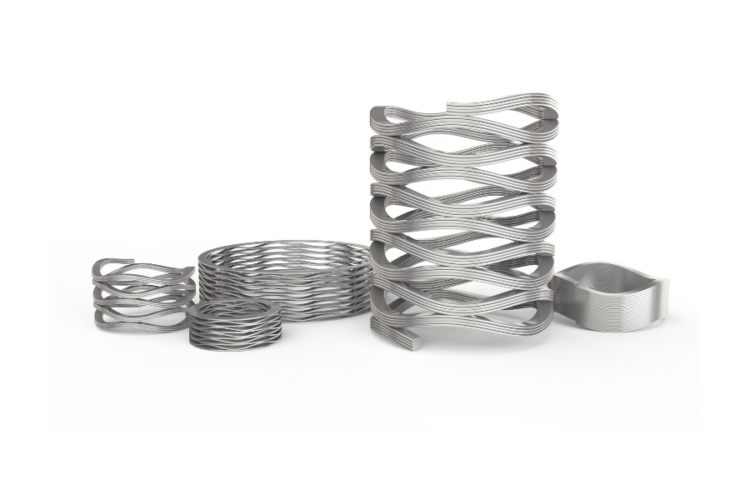
  • Styles: Single-turn, multi-turn, nested, round-wire, and linear
  • End configurations: Plain, shim, floating, overlap, gap-type, and patented flat-end designs

Materials & Finishes

Evaluate materials and surface treatments for temperature, corrosion resistance, environmental exposure, and mechanical requirements.

  • Carbon steel: SAE 1070-1090 (standard)
  • Stainless steels: 302, 316, and 17-7 PH
  • Specialty alloys: Inconel X-750, Elgiloy, A286, Hastelloy C276, and more
  • Finishes: Oil dip, electropolishing, and passivation

Custom Wave Spring Design Requirements

Have a completed drawing or just the application requirements? Rotor Clip engineers can help you evaluate the design and determine the appropriate wave spring solution. Non-disclosure agreements (NDAs) are available upon request to protect confidential design and application information.

Helpful Information to Provide:

  • Dimensions: Available bore and shaft diameter, work height, and axial space
  • Load & Deflection: Required spring force at the work height, deflection, and available travel
  • Operating Conditions: Temperature, environment, static or dynamic loading, expected cycle life, and any special loading conditions
  • Materials & Finishes: Preferred alloys, surface treatments, or specific material requirements
  • Production Requirements: Estimated quantities, drawings, and any applicable specifications

Submit Your Requirements

Manufacturing Advantages for Custom Wave Springs

Rotor Clip’s integrated manufacturing capabilities support custom wave spring designs with greater control over material processing, production quality, and manufacturing flexibility.

Explore Rotor Clip’s In-House Manufacturing.

Precision edge coiling process for spiral retaining rings and wave spring manufacturing

No Additional Tooling Costs

Rotor Clip’s coiling process allows many custom wave spring designs to be developed and modified without special tooling. When an existing wire size is used, a custom spring can cost the same to produce as a standard part, making it easier to evaluate prototypes, refine designs, and move into production.

woman creating wire for retaining ring manufacturing

In-House Wire Rolling & Coiling

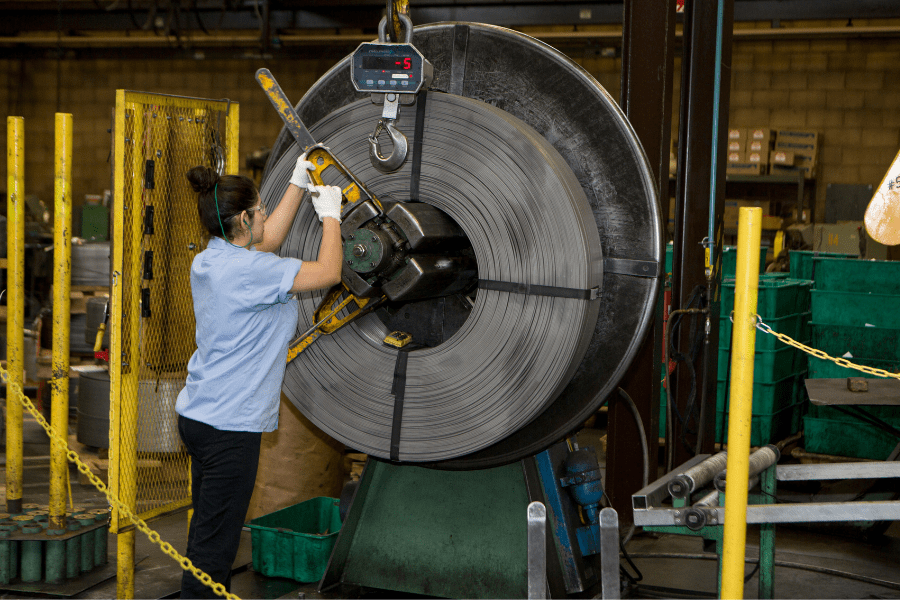
We produce flat wire in-house and use precision coiling equipment to control material thickness and spring geometry. This integrated process helps maintain the dimensional consistency and load characteristics required for custom designs.

Quality & Production Capabilities

Our facilities are certified to ISO 9001, ISO 14001, IATF 16949, AS9100, and ISO 13485. In-house heat treatment, finishing, and inspection processes support consistent spring quality. Documented process controls and lot traceability help maintain manufacturing requirements from prototypes through production.

engineers meeting

Engineering Support from Design to Production

Rotor Clip engineers work directly with customers from initial design evaluation through prototyping, load and cycle testing, and production. Our team reviews application requirements, identifies potential design challenges, and recommends spring configurations, materials, and specifications to meet the required performance.

As designs evolve, we can evaluate changes to spring dimensions, geometry, load characteristics, and other specifications based on prototype testing or updated application requirements. This collaborative approach allows us to refine a custom wave spring before production, helping customers achieve the right fit and performance for their assembly.

Talk to a Rotor Clip Engineer About Your Project

Custom Wave Spring Solutions for Complex Applications

Rotor Clip has developed specialized wave spring designs to address demanding requirements beyond conventional configurations. Interlaced and InterShim™ wave springs offer distinct advantages for applications involving high loads, axial deflection, torsional forces, and rotational movement.

Interlaced Wave Springs

Interlaced wave springs combine multiple wave spring coils into a single unit to achieve higher spring forces while accommodating axial deflection. By distributing the load across interwoven coils, these designs can meet demanding force and travel requirements without overstressing the spring material. Rotor Clip can customize the number of interlaced coils and spring geometry to meet specific application requirements.

See How Interlaced Wave Springs Solve High-Force Challenges

InterShim™ Wave Springs

Originally developed for electric vehicles, Rotor Clip’s patented InterShim™ Wave Spring features alternating active (waved) and inactive (flat) turns. The flat turns act as built-in shims, allowing them to glide against each other rather than riding onto one another, which prevents the spring from collapsing under torsional loads and high acceleration.

Explore the InterShim™ Wave Spring

Frequently Asked Questions About Custom Wave Springs

Find answers to common questions about custom wave springs, manufacturing, and engineering support.

Many custom wave spring designs can be manufactured without additional tooling costs. Rotor Clip’s coiling process allows spring dimensions and geometry to be adjusted special tooling, particularly when using existing wire sizes. Rotor Clip engineers will confirm whether any tooling is needed during design review.

Yes. Custom wave springs can replace conventional coil springs or stacks of disc springs when the required load, deflection, and available space allow. Multi-turn wave springs can save up to 50% axial space compared to conventional coil springs, while nested wave springs can replace disc spring stacks in high-load applications.

Yes. Rotor Clip engineers can evaluate wave springs from other manufacturers and develop an equivalent design based on the required dimensions, load, deflection, materials, and operating conditions. Customers can provide an existing part drawing, specifications, or sample for review. Our team can also recommend design adjustments to improve performance or meet specific application requirements.

Yes. You can begin with your application requirements, including available space, required load, work height, operating conditions, and expected quantities. Rotor Clip engineers can review this information and help determine the spring configuration and specifications needed for your application.

See what we need to get started

Yes. Rotor Clip supports custom wave spring development through prototyping and evaluation before production. Prototypes allow customers to assess fit and performance, with design adjustments made as needed before final approval.

Minimum order quantities depend on the spring’s dimensions, material, configuration, and manufacturing requirements. Rotor Clip evaluates each custom request to determine feasible quantities, and small prototype quantities are often possible before committing to production.

Lead times depend on design complexity, material availability, prototype requirements, and production quantities. Rotor Clip reviews these factors during the engineering and quotation process and provides an estimated lead time based on the proposed design. Because we produce wire and stock materials in-house, we can often shorten lead times and deliver prototypes quickly.

More than Parts. A True Partnership.

Our passion is creating the best rings, springs, and clamps. Our mission is to make your work a success. We are here for you.